

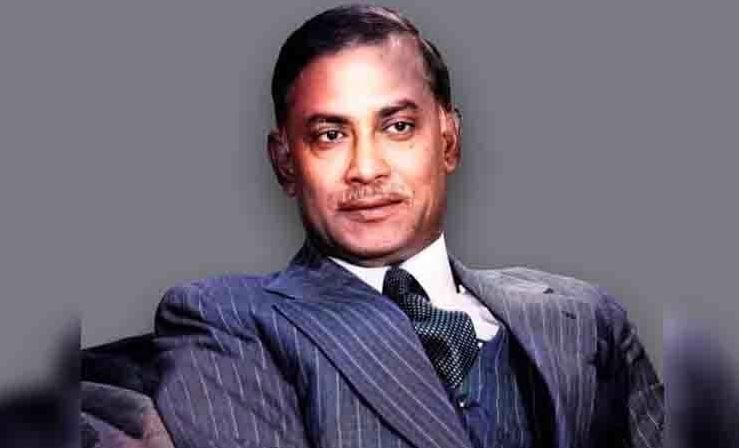
The 90th birth anniversary of the architect of multi-party democracy and founder of the Bangladesh Nationalist Party (BNP), former president Ziaur Rahman, Bir Uttam, is being celebrated today (January 19).
Ziaur Rahman, also the proclaimer of Bangladesh’s independence and an architect of modern Bangladesh, was born on January 19, 1936, in Bagbari village under Nashipur Union in Gabtoli of Bogura district.
Ziaur Rahman was the second of five sons of chemist Mansur Rahman and Jahanara Khatun. His nickname was Kamol.
On the eventful November 7, 1975, Ziaur Rahman came to the centre of state power.
President Ziaur Rahman founded the Bangladesh Nationalist Party (BNP) on September 1, 1978. The former president was assassinated by a group of misguided army personnel on May 30, 1981.
Read more: BNP announces 2-day programme on Ziaur Rahman’s 90th birth anniversary
BNP will observe the birth anniversary of its founder with a two-day programme.
Party leaders and activists from all levels, along with members of the BNP National Standing Committee, will lay wreaths and offer ‘Fatiha’ at the mausoleum of Ziaur Rahman in the city’s Sher-e-Bangla Nagar area at 11am today.
The Doctors’ Association of Bangladesh (DAB) will organise a medical camp to mark the birth anniversary.
A discussion will be held at 11am on January 20 at the Institution of Diploma Engineers Bangladesh (IDEB) auditorium in the capital’s Kakrail. Senior BNP leaders and prominent national figures will join it.
Simultaneously, discussion meetings and ‘dua mahfils’ will be organised by BNP and its associate bodies and front organisations at district, metropolitan, upazila, and thana levels across the country.
Ziaur Rahman, commander of the “Z Force” and Sector-1 during the country’s War of Liberation, will be remembered with due respect for his historic and unforgettable contribution; he later emerged as a seasoned and popular statesman.
His uncompromised patriotism, steadfast commitment to democratic norms and values and profound love and respect for the country and its people endeared him to the nation, elevating him into a truly beloved and iconic figure.
His leadership shaped the nation’s political destiny.
He spent his childhood in Kolkata, where his father, Mansur Rahman, served as a scientific officer of the then British government. He studied up to class seven at Hare School, one of the oldest and most prestigious educational institutions, located at 87 College Street and founded by renowned educational reformer David Hare in Kolkata.
After the Partition in 1947, Ziaur Rahman moved to Karachi with his family, where he continued his studies at DJ Sindh Government Science College, a historic institution established in 1887.
While studying at the college, he joined the Pakistan Military Academy as an officer cadet in 1953 and received commando training as a second lieutenant in 1955.
Ziaur Rahman joined the second batch of the East Bengal Regiment at Joydebpur Sub-Cantonment, near Dhaka, as second-in-command in April 1967, and in the same year, he proceeded to West Germany for advanced military training.
In September 1970, he was posted to Chattogram, with his base at Sholoshahar Bazar.
On March 25, 1971, the Pakistani occupation forces swooped on the defenceless people of East Pakistan, and soon he joined the Liberation War. On the nation’s darkest day in 1971, his unforgettable voice — I, Major Zia, do hereby declare — infused among countless hearts the hope and courage to wage the Liberation War.
Keeping aside the love and affection for his wife and sons, he devoted himself to mobilising the armed resistance against the occupation forces, raising the ‘Z Force’ and dutifully serving as the commander of Sector No. 1, established in the initial period of the war.
In recognition of his extraordinary valour, he was later awarded the gallantry title ‘Bir Uttam’.
Read more: Ziaur Rahman’s Independence Award reinstated
Despite the multiple changes of power following the August 1975 change of political landscape, Ziaur Rahman remained steadfast in carrying out the professional duties which he was entrusted with by the state amid the turbulences in the military forces.
Amidst the turbulence within the army on November 3, 1975, a group imprisoned him at his house, but on November 7, he was freed in the historic revolution of sepoys (people) and eventually entrusted with the charge of leading the state.
After taking charge as the president, he introduced multiparty democracy, ending the one-party BAKSAL rule imposed by Sheikh Mujibur Rahman through the Fourth Amendment to the constitution on January 25 in 1975, which restricted all newspapers except four.
Ziaur Rahman later restored freedom of the press and expression by lifting the ban through the Fifth Amendment to the constitution.
He assumed the Office of President on April 21, 1977, and was subsequently elected to the presidency as the head of the state and government on June 23, 1978, defeating Awami League-backed candidate Liberation War Commander-in-Chief General MAG Osmani by a wide margin in a free, fair and competitive election.
Ziaur Rahman also revitalised political parties to restore democracy, founded the Bangladesh Nationalist Party (BNP) in 1978 and introduced the 19-point programme, a new development framework, reflecting his party’s political philosophy.
He immediately set an example by restoring law and order across the country, decisively curbing corruption and all forms of crime, including theft, robbery, mugging, and hijacking, and restoring a sense of security and public confidence in a short time.
On May 30 in 1981, Ziaur Rahman was assassinated in an abortive military coup.


